

Berliner Dom (Berlin Cathedral) - an architectural highlight in the heart of Berlin
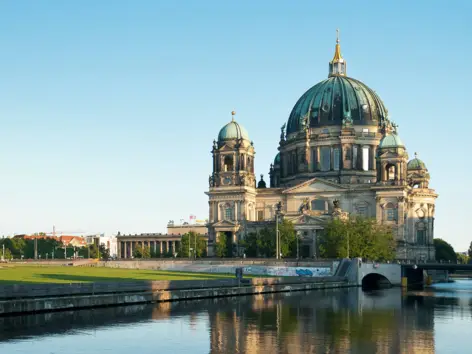
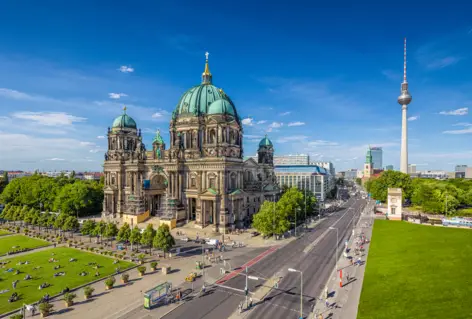
The Berlin Dom in the historic and present-day center of Berlin is one of the largest Protestant churches in Germany and is considered a landmark of the capital. It is located on an island directly on the River Spree and is considered the gateway to Museum Island.
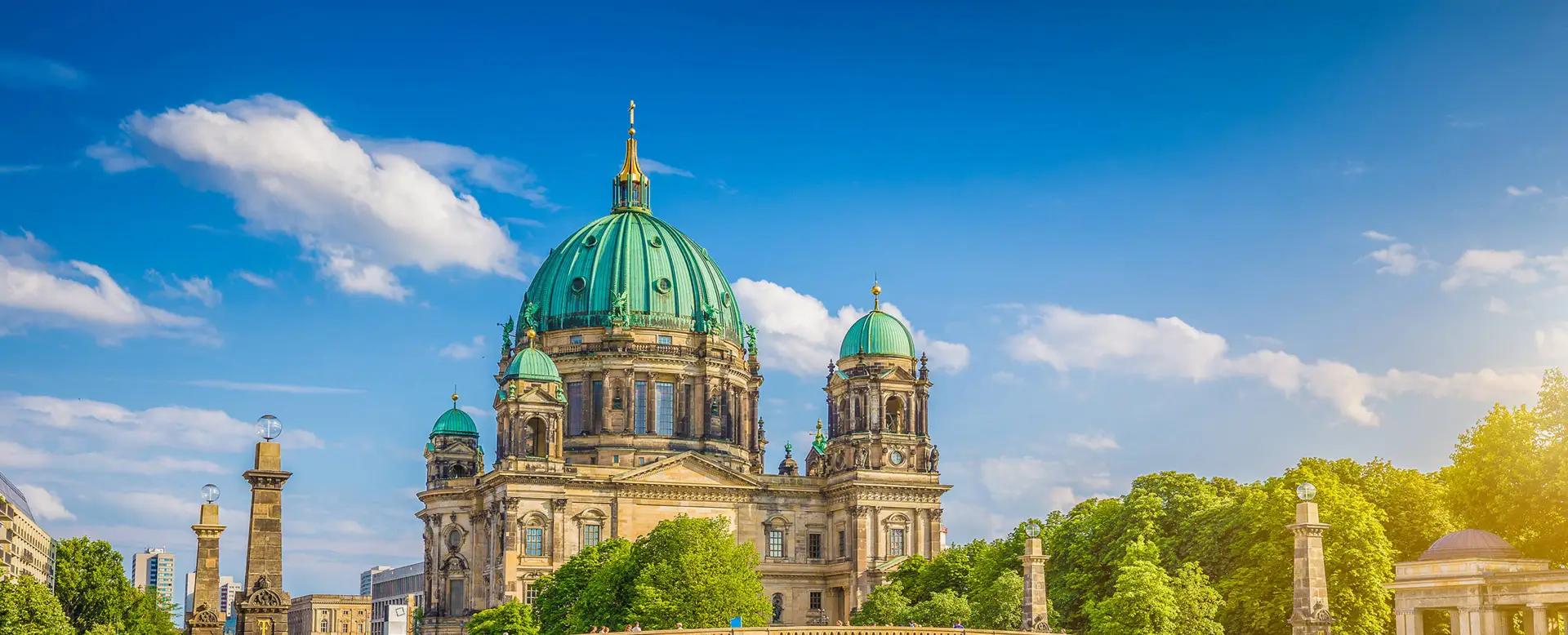
Its location in the center of the city and within walking distance of Alexanderplatz makes it easy to get to. Buses on lines 100 and 200 stop almost directly in front of the entrance area. Berlin Cathedral on the Lustgarten is worth seeing from the outside as well as the inside. The four towers, the dome and the golden cross make it a real eye-catcher.
They are best enjoyed in the Lustgarten, the area in front of the cathedral. The Lustgarten used to be a park, then a parade ground and is now primarily a meeting place for tourists and artists who entertain them. The name is explained by what can be done here: Pleasure strolling and enjoying the surroundings and the view of the church.
Similarities with St. Peter's Basilica in Rome or St. Paul's Cathedral in London were intended by the architect. Inside, pomp, history and plenty of decor await the visitor. The baptistery and wedding church, the imperial staircase, the Hohenzollern crypt and the ascent to the dome are among the highlights that the cathedral has to offer. The central room with its gold decorations, paintings and mosaics is both a space for contemplation and a symbol of the link between art and architecture and religion. The basic concept of architect Julius Carl Raschdorff was inspired by the Italian High Renaissance with Baroque elements.
Unlike many other churches, visitors to the cathedral pay admission. This is because the parish and church staff generate the majority of their budget themselves and ensure the preservation of the listed building. Admission includes guided tours and the ascent to the dome of the cathedral. Every Sunday, the cathedral invites guests from all over the world to attend the service.

Book your hotel on H-Hotels.com for your stay in Berlin. We offer you the following advantages:
- Book hotels in Berlin at the best price
- Berlin hotels can be booked without a credit card
- Minibar included in all HYPERION Hotels
- Breakfast included in all H2 Hotels
From the Hofkirche to reconstruction
The Berliner Dom was the court church of the Hohenzollern dynasty. This ruling dynasty played a decisive role in Berlin's rise to become a cosmopolitan city. There was already a church on this site in the Middle Ages, which served as the court church for the city palace, its inhabitants and the king.
Renowned architects such as Karl Friedrich Schinkel were involved in its design. Schinkel's buildings shaped the Berlin cityscape of the 19th century. However, the Prussian King and German Emperor Wilhelm II found the previous building too simple and not in keeping with Berlin's international standing. He commissioned the cathedral architect Julius Carl Raschdorff to build a new cathedral and had the previous building demolished.
In 1905, Berliner Dom was built in three parts: the preaching church in the middle, the baptistery and wedding church in the south and the memorial church in the north. The Second World War caused severe damage to the cathedral. A bomb destroyed the dome and damaged the sermon church, the crypt and the memorial church. The memorial church was blown up as part of the reconstruction. Church services and prayers were only possible after extensive measures were taken from the 1980s onwards.
The reconstruction officially ended in the 21st century with the new golden domed cross. Inside, the focus was on restoring the church to its original state to a large extent. The façade was given a simpler design and the dome and towers no longer reach their original size. there are 35 figures and numerous elaborate stone carvings to discover on the façade.

From the Hohenzollern Crypt to the Imperial Staircase

Magnificent sanctuary
The cathedral contains important works of art, architectural and technical highlights as well as testimonies to Berlin's history. In the sermon church, the altar room stands out with its elaborate design. The designs for the construction of the altar go back to Friedrich August Stüler. It is made of marble and onyx. The marble baptismal font by Christian Daniel Rauch is an equally impressive combination of art and craftsmanship.
If you let your gaze wander, you will see the Acts of the Apostles in the reliefs, mosaics with the evangelists above the galleries and pictures on the windows of the altar. They depict the birth, crucifixion and resurrection of Jesus Christ. The altar in the baptistery and wedding church was created from the remains of the memorial church and is made of red marble. The altarpiece here is one of the cathedral's most important works of art: the painting "The Outpouring of the Holy Spirit" by the German artist Carl Begas.
In the Hohenzollern crypt, the history of the capital and its rulers unfolds in a morbid way. It is considered one of the most important dynastic burial places in Germany. The crypt contains the last remains of Berlin's princes and kings. The coffins and sarcophagi in the Hohenzollern crypt are examples of different stylistic periods and range from simple stone coffins to opulently decorated sarcophagi. Over 90 coffins can be seen in the crypt. These include the sarcophagus of the Great Elector, who is regarded as the initiator of the rise of Brandenburg-Prussia.
A masterpiece of organ building is the Sauer organ, which was the largest organ in Germany when it was inaugurated in 1905. It has been preserved in its original condition. The Schuke organ in the baptistery and wedding church is a product of the post-war period. The bells, which ring twice a day, are located in the north-western tower.
Another highlight of a visit to the cathedral is the Imperial Staircase. It served as the entrance for Emperor Wilhelm II and his wife. The staircase is accordingly detailed and exclusively decorated with marble, copper and gilded bronze. It has an electric elevator dating from 1905, although it is no longer in operation.
The dome of Berliner Dom
The dome of Berliner Dom offers a special view of the surrounding buildings, streets and squares. The dome is 98 meters high and crowned with the golden dome cross. Although it does not reach its original height before the Second World War, it still characterizes the appearance of the cathedral. The dome gallery is at a height of 50 meters.
Climbing the 270 steps is worthwhile for visitors and is included in the entrance fee. From the top you can see the Humboldt Forum, the boulevard Unter den Linden, the Gendarmenmarkt, the Rotes Rathaus and Museum Island. The walkway is outdoors and is secured by a wide balustrade.
In addition to a panoramic view of the historic center of the city, the ascent offers a further and unique perspective of the cathedral. From here, the eight bronze angels and the cross on the dome of the cathedral can be viewed more closely. They are six meters high and carry musical instruments.

Church services, weddings and concerts

Church service in Berlin Cathedral
For tourists, its function as a place of worship and church takes a back seat at first glance due to its many sights. However, Berlin Cathedral has a lively church community and church staff. It is a place of faith that is open to all people and visitors.
There is a daily service in the church, devotions and children's services on Sundays. Visitors and guests are welcome to attend the service. The service with communion on Sunday at ten o'clock is recommended for foreign guests, as it includes simultaneous translation into English. At the same time, there is a children's service for children aged three to twelve, which caters to their needs.
A place of silence and prayer is available for prayer and remembrance in Berlin Cathedral. This room is next to the baptismal and wedding church and can also be entered from outside, so it is not necessary to purchase an entrance ticket first. As the cathedral functions as a place of worship for the Protestant community, Christian events such as baptisms and weddings take place there.
On Fridays and Saturdays, visitors have the chance to see couples beaming with joy in front of the cathedral on the high granite steps. Weddings take place in the early afternoon on these days. The concerts in the cathedral are a special experience for music lovers with their unique ambience and impressive sound. The concerts range from orchestras to choirs. The cathedral vespers, which take place on Saturdays at 6 pm, are a great way to hear the sound of the organs.
Another cultural offering in the cathedral are regularly changing exhibitions and events dedicated to art, religion or the church. If you visit Berlin in the fall, the Festival of Lights offers a special perspective on the cathedral. The cathedral then provides the backdrop for various light installations and the outer façade is transformed into a new work of art.
From Berlin Cathedral to Museum Island
Berlin Cathedral is the ideal place to start a cultural discovery tour of the capital. Its location near Alexanderplatz allows you to travel from the city center to other sights by train. Straight ahead, the street Unter den Linden leads past the Humboldt University, the State Opera and Bebelplatz directly to the Brandenburg Gate. The Staatsoper is the oldest of Berlin's three opera houses.
On the southern side is the Humboldt Forum, while in the north you can discover the World Heritage Site Museum Island with its five museums. The most famous museum on the island is the Pergamon Museum with its Pergamon Altar. But there is also unique art and exhibits to discover in the Altes Museum, Neues Museum, Bode-Museum and Alte Nationalgalerie. Cross the Spree at the back of the cathedral to the interactive DDR Museum.
Continue straight ahead to the Rotes Rathaus and Alexanderplatz, which you can't miss with its television tower. A good starting point for planning your further route through Berlin after visiting the cathedral is the cathedral café in the basement. In summer, it offers an outdoor area under large shady trees with a view of the Spree, the people passing by and the Humboldt Forum.